englanti

Tiimimme tarjoaa ylpeänä oikea-aikaisen takuun ja 100 % asiakastyytyväisyystakuun.
Ota yhteyttä verkossa


 Kotiin / Uutiset / Teollisuuden uutisia / Mitsubishi Alternator Guide: OE Numbers, Specs, Failure Signs and Replacement Tip
  2026.09.08
 Teollisuuden uutisia
A Mitsubishi Pajero or Hyundai Galloper rolls in with the battery warning lamp glowing at idle. The owner explains that a replacement alternator was fitted last month, yet the battery still drops below 12 V overnight. The first step is not an electrical test — it is a visual check. The belt is a six-groove sitting on a four-groove pulley, one position off centre, and that single mismatch explains the whole charging complaint.
A Mitsubishi alternator is not defined by the badge on the frame. It is defined by five parameters: system voltage, rated current, pulley profile, mounting geometry and the original OE cross-reference . Match all five and a replacement charges exactly like the factory unit. Miss one and a brand-new alternator will be diagnosed as faulty, because it was never mechanically or electrically compatible with the vehicle.
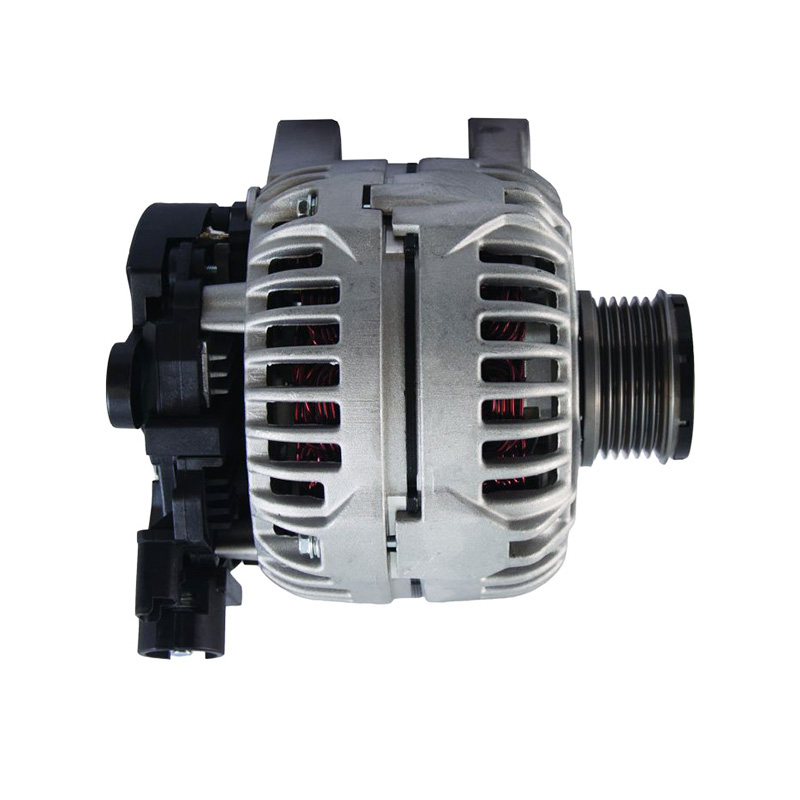
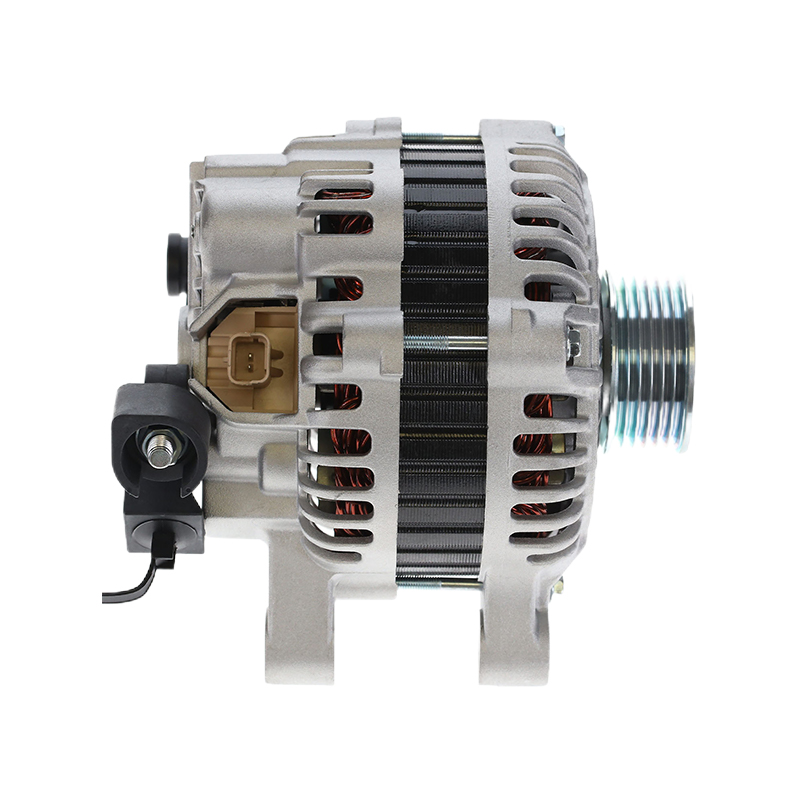
Mitsubishi alternators are compact, lightweight claw-pole machines with an integrated electronic regulator. The same architecture appears in Mitsubishi passenger cars and light vans, in Hyundai and Kia models of the same generation, and in a broad range of industrial and construction equipment. For a parts supplier this means dozens of OE numbers behind one basic design, which is why the replacement market works on cross-references rather than on brand names alone.
The architecture is simple and stable: a belt-driven rotor spins inside a stator, and the internal regulator controls the rotor field current to hold the system voltage at target. Only a handful of components actually age out of tolerance.
The only sliding contact in the machine. As the carbon brushes wear, field current becomes intermittent, so output works when cold and disappears when hot. Replacing the brushes and cleaning the slip rings restores most units with no other repair.
Holds output at 13.5 to 14.8 V on a 12 V system and 27 to 29 V on a 24 V system. Failure usually means overcharging or no field current at all. Heat, vibration and reverse-polarity jump-starts are the main causes.
The six-diode pack converts three-phase AC to DC. It fails after thermal stress, often following a failed regulator or a blocked cooling path. The clues are high AC ripple, flickering headlights and radio whine.
Output spans from small 12 V 40 A units on compact diesel engines to 24 V 130–150 A units on heavy trucks and mining machines. The construction is similar; what changes is the winding count, field strength, pulley spec and frame mounting.
Lining up typical Mitsubishi-spec replacement families gives a practical overview of what workshops and distributors handle week to week.
Light vans on Mitsubishi-based platforms are where passenger and light commercial ranges overlap. A 12 V 65 A unit with MD and A005TB references covers the Galloper, the H-100 diesel line and several models that share the same electrical platform.
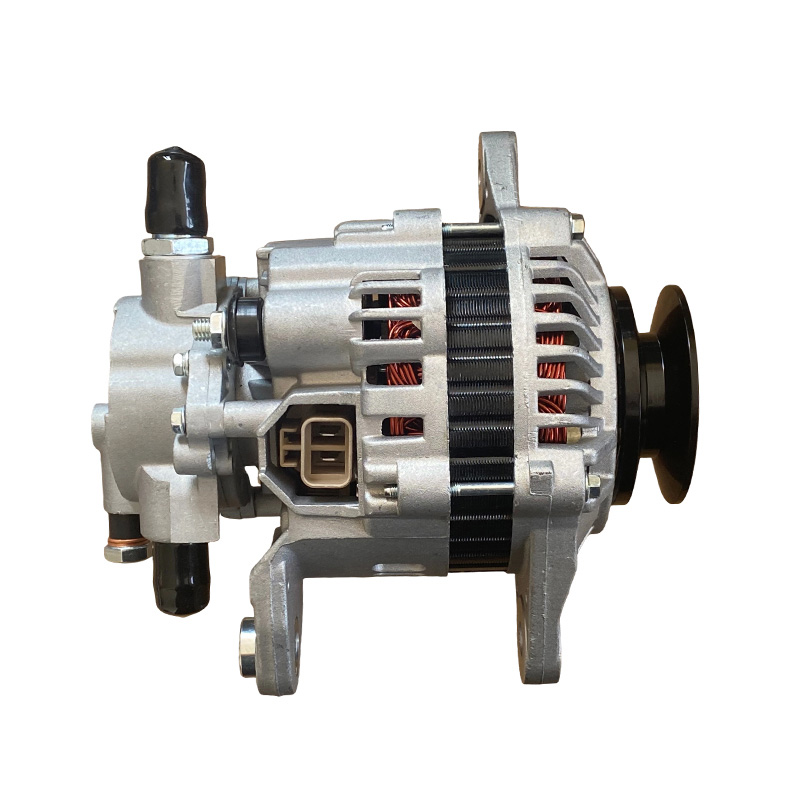
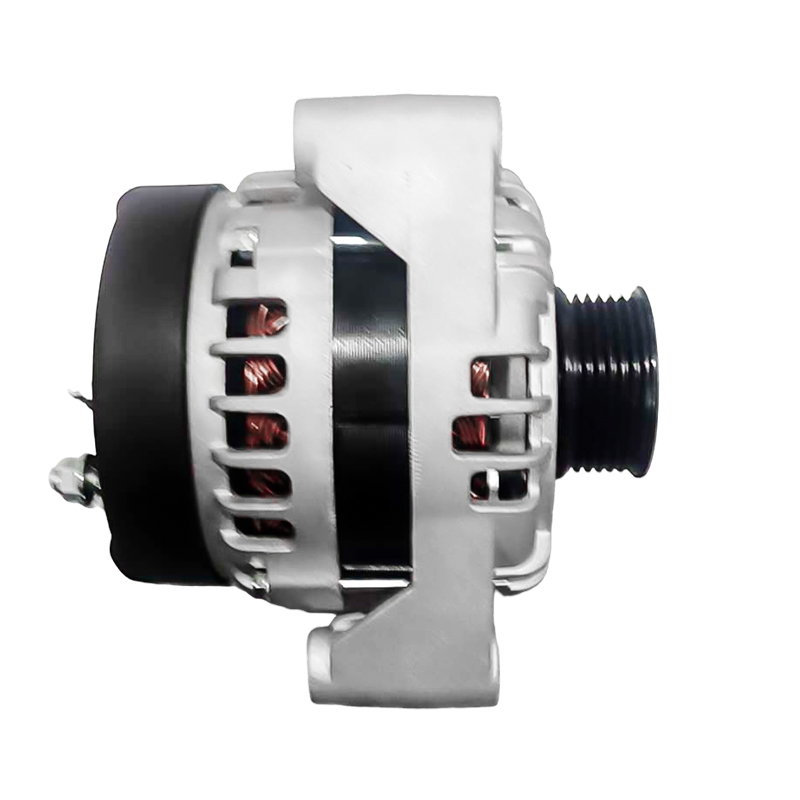
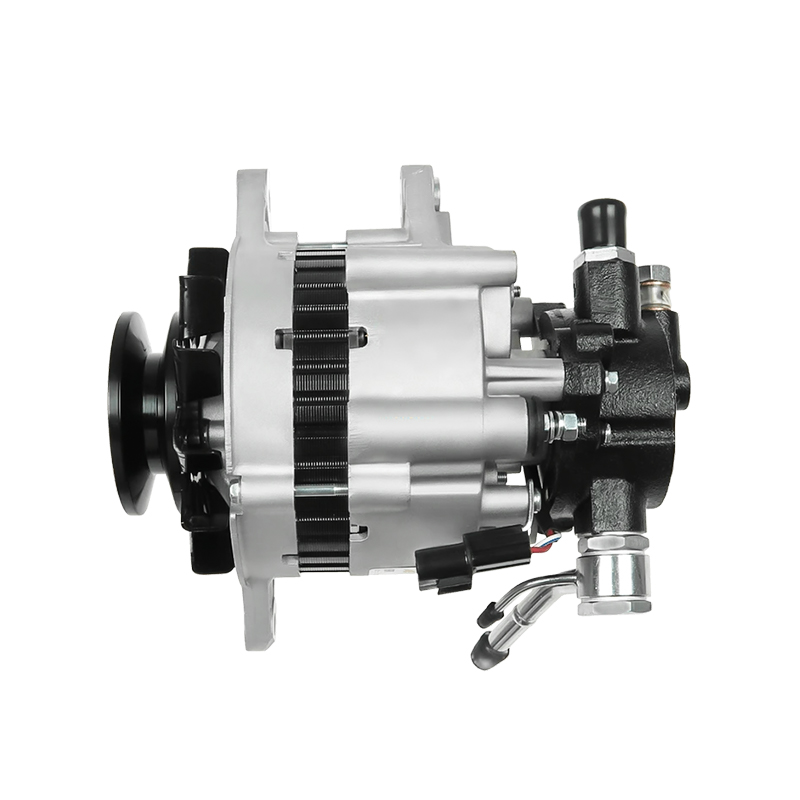 12V 65A Alternator for Hyundai H100 and Galloper 2.5 TD This alternator suits Hyundai H100 and Galloper 2.5 diesel models, offering a direct replacement for multiple OEM references. It maintains stable charging in light commercial vans with fully new components and proper mounting compatibility. View Product →
 When returned alternators are dismantled and inspected, the failure distribution has been consistent for years across passenger, truck and construction applications. It is not electrical magic — it is mechanical wear and thermal stress.
Two findings matter in practice. First, brush wear produces an intermittent symptom that many installers misdiagnose as a battery fault, because output comes and goes with temperature. Second, most regulator and rectifier failures are secondary: they were triggered by a loose belt, a blocked cooling duct, or a battery with a shorted cell. Checking the rest of the charging system saves a second repair.
Platform sharing moves this alternator family far beyond Mitsubishi-branded vehicles. The replacement market divides roughly as follows.
Construction and agriculture are often underestimated by suppliers that only think in car terms, yet excavators, wheel loaders and tractors from Caterpillar, Komatsu, Case and New Holland use the same compact charging architecture. On the 24 V truck side, one alternator model can serve a whole chassis family: a 24 V 130 A replacement unit fits several Scania P- and R-series trucks and behaves identically to the original in load response.
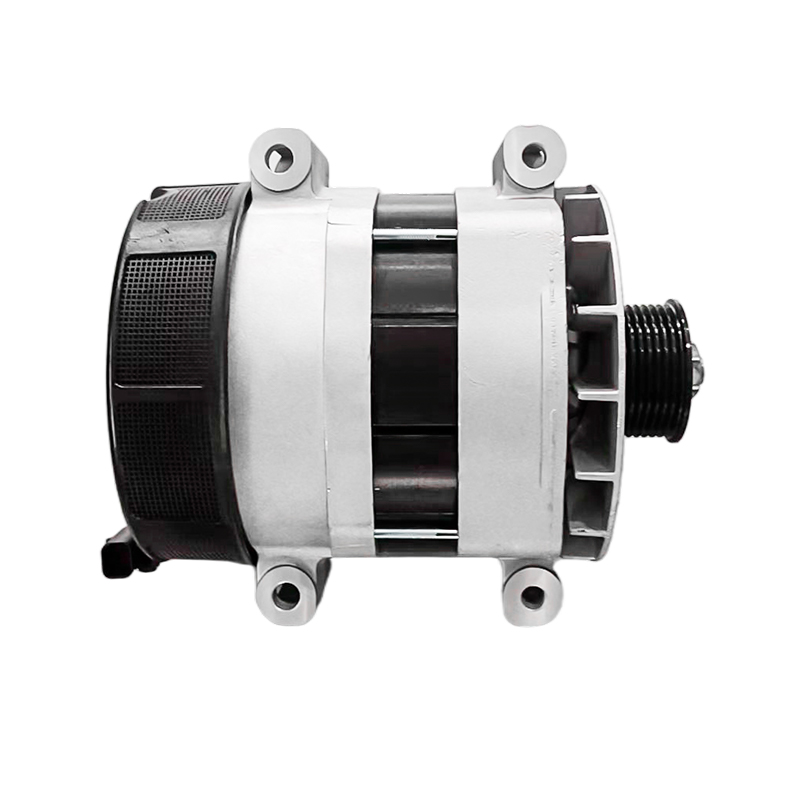
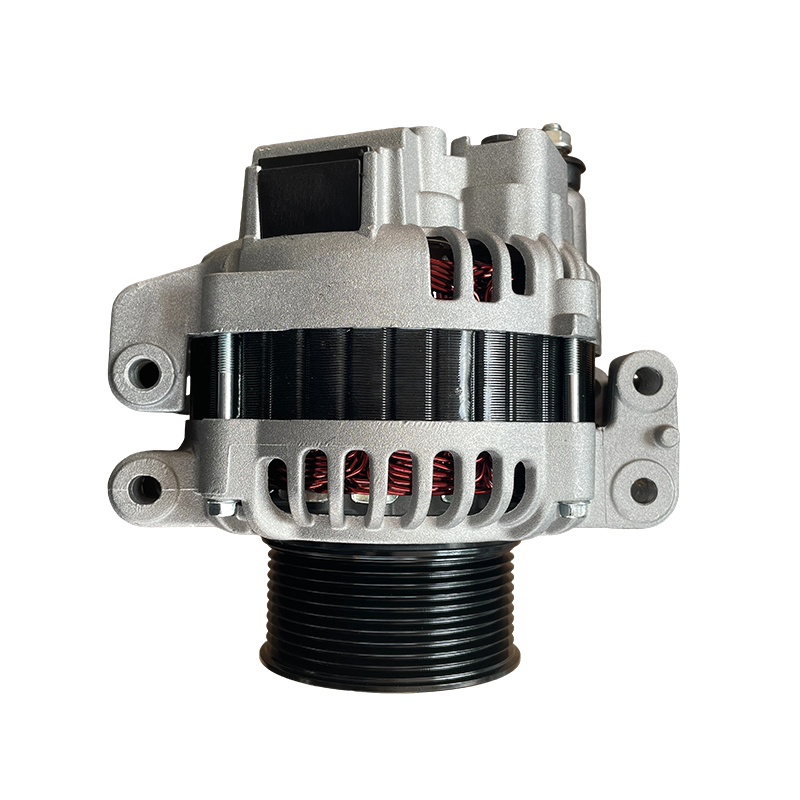 24V 130A Alternator for Scania P and R Series Trucks This 24V 130A alternator is engineered for Scania P450, R450, R500 and R580 models with DC13 and DC16 engines, replacing several OEM numbers. It delivers steady charging for long-haul operations and heavy electrical loads. View Product →
 Because the same alternator was fitted under different brand names, the most reliable way to identify a unit is the OE number stamped into the housing. A cross-reference catalog organized by those original OE numbers turns a fifteen-minute search into a thirty-second lookup.
Browse the Mitsubishi alternator cross-reference category when you need to match a stamped number to the correct replacement.
Follow the sequence from the component to the catalogue; every step takes seconds if the alternator is already on the bench.
That final step is where the catalogue earns its keep. When the replacement is manufactured and tested to the original spec, the installation should require no shimming, no wiring changes and no idle adjustments.
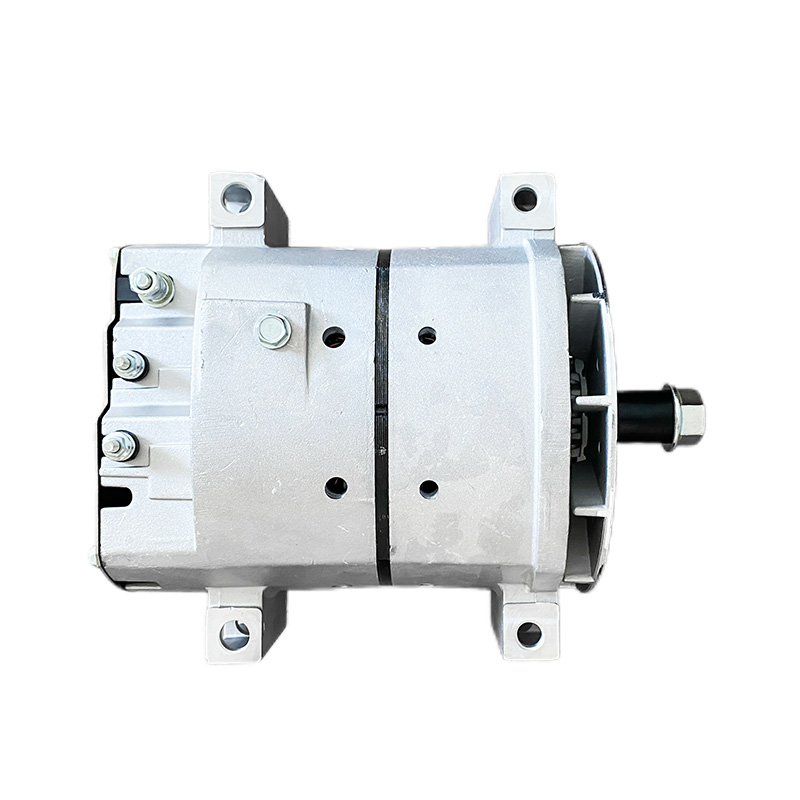
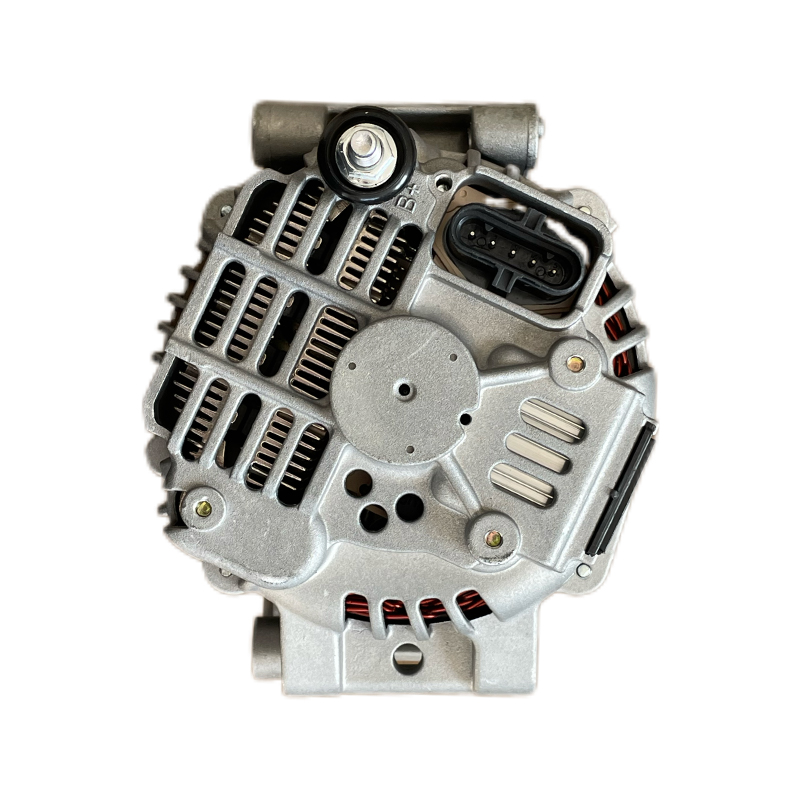 24V 100A Alternator for Scania DC13, DC16 and DC9 Engines This alternator fits multiple Scania engine types, including DC13, DC16 and DC9, and replaces references like A004TR6091 and 2395909. Built with new components, it provides reliable power for truck and marine applications. View Product →
 The system around the alternator determines how long it lasts. The routine that prevents repeat failures is short:
On the compliance side, a reliable replacement alternator carries the full list of OE references, a clear voltage/current/pulley marking, and a traceable batch or serial number. Manufacturers with dedicated test equipment release units with documented output curves, which is exactly what a professional buyer needs to justify the part to a customer. For 24 V truck systems, the load cases are different enough to warrant their own study: our heavy-duty truck alternator types, specs and selection guide goes through the chassis-level checks in detail.
Finish with documentation. Keep the failed OE number together with the replacement number, the date and the vehicle mileage. Over a year of records, you will see exactly which alternator families dominate your market — and the five-part check will keep the comeback rate close to zero.
Suositellut tuotteet
Saat eksklusiivisia tarjouksia ja uusimpia tarjouksia, Ota rohkeasti yhteyttä!
Toteutamme järkähtämättömästi periaatteen "laatu ensin, asiakas ensin, tiukka hallinnointi ja kuuluisan tuotemerkin luominen". Ammattilainen OEM/ODM-autojen laturien valmistajat ja Raskaiden kuorma-autojen laturien toimittajat Kiinassa.
Tuote
Yhteystiedot.
+86-180 5150 2183
+86-0510-83880396
No. 11 QiBei Road, Yuqi Town, Wuxi City, Jiangsun maakunta, Kiina
 OEM-laturitoimittaja Räätälöity autojen laturi Kuorma-autojen vaihtovirtageneraattorien toimittaja